
The Rise of Autonomous Agents in 2025 explores practical patterns, platforms, and governance conside...
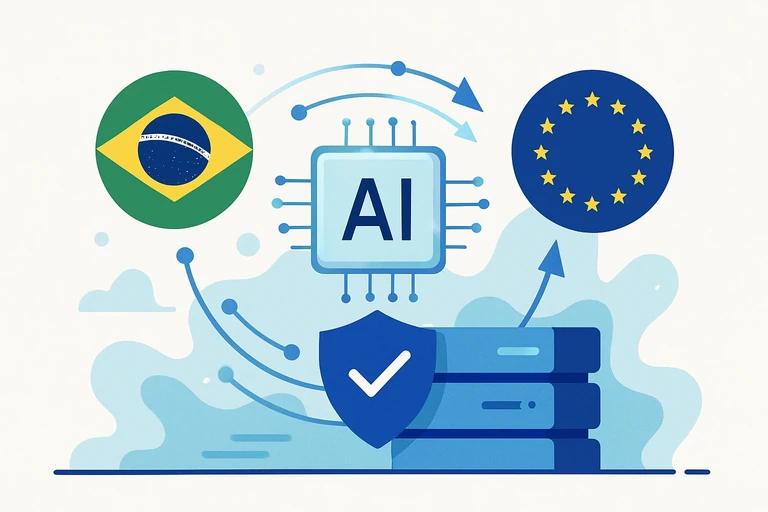
Conformity with LGPD, GDPR, and the European AI Act: Preparing for the Future
Navigating LGPD, GDPR, and the European AI Act requires a practical, cross-border approach to data governance and AI risk. This guide provides a step-by-step framework with real-world steps, governance structures, and templates to build compliant, AI-enabled software.
Introduction
As organizations increasingly operate across borders and deploy AI-enabled products, aligning with data protection laws and upcoming AI governance rules is not optional—it’s a strategic differentiator. This post provides a practical, field-tested roadmap to harmonize compliance with Brazil’s LGPD, the EU’s GDPR, and the European Union’s evolving AI Act. You’ll find concrete steps, governance frameworks, and real-world examples to embed privacy and risk controls into product design, vendor management, and cross-border data flows.
1) Understanding LGPD in Brazil: core obligations and enforcement
Brazil’s General Data Protection Law (LGPD, Lei Geral de Proteção de Dados) regulates the processing of personal data and creates binding rights for data subjects. Key points organizations should know include data subject rights, data breach response, and sanctions that can impact the bottom line. The Brazilian National Data Protection Authority (ANPD) has explicit sanctioning powers, including fines of up to 2% of the company’s Brazilian revenue in the prior year, capped at BRL 50 million per infraction, plus other measures such as publishing the infraction, blocking data, or suspending processing activities. The sanctions regulation (Resolution CD/ANPD No. 4/2023) formalized how penalties are calculated and applied.
- Simple fine: up to 2% of Brazilian revenues in the previous year (taxes excluded), capped at BRL 50 million per infraction.
- Other sanctions: warning, daily fines, data blocking, data deletion, and partial/total suspensions of data processing or databases.
- Sanctions are triggered through an administrative process that weighs severity, intent, and corrective measures taken.
Practical implication for product teams: map data flows, establish a data inventory, and implement an adaptive DPIA approach where necessary. Several high-profile LGPD enforcement actions began bubbling up in 2023–2024, underscoring the need for proactive governance and documented decision-making.
2) GDPR basics: a global privacy baseline for cross-border data flows
The General Data Protection Regulation (GDPR) is the EU’s comprehensive privacy framework. It sets out the core principles (lawfulness, fairness, transparency; data minimization; security), and it empowers regulators to issue substantial fines for breaches. The highest-tier penalties can reach up to €20 million or up to 4% of a company’s total worldwide annual turnover, whichever is greater, depending on the nature and gravity of the violation. In addition to monetary penalties, GDPR provides a robust set of rights for data subjects and obligations for controllers and processors, including breach notification requirements and the need to maintain records of processing activities.
- Breach notification: in many cases, data breaches must be reported to authorities within 72 hours of discovery (Article 33).
- Data governance: organizations should maintain records of processing activities (Article 30) and conduct DPIAs (Data Protection Impact Assessments) when processing may result in high risk to individuals (Article 35).
- Cross-border transfers: transfers to third countries require safeguards (e.g., adequacy decisions, SCCs, or other approved mechanisms).
For teams building and operating software for EU customers (or handling EU citizens’ data), GDPR is a baseline. It also informs how privacy-by-design and accountability principles should be embedded in product architecture. Official sources detail the risk-based enforcement approach and the scale of potential penalties.
3) The European AI Act: what’s coming for AI systems and providers
The EU’s AI Act represents the first comprehensive framework to regulate artificial intelligence at a regulatory level. It adopts a risk-based approach, with higher obligations for high-risk AI systems and lighter requirements for minimal-risk applications. The Act entered into force on 1 August 2024 and will be fully applicable by 2 August 2026, with specific transitional milestones (e.g., governance for GPAI models and literacy obligations) starting earlier. General-purpose AI model providers face obligations starting 2 August 2025, and high-risk AI systems embedded in regulated products have an extended transition through 2 August 2027. This staged rollout is designed to balance innovation with fundamental rights protection.
Unacceptable risk (banned), High risk (tight controls), Limited risk (transparency), and Minimal risk (no specific obligations). Documentation, risk management, data governance, human oversight, and conformity assessments for high-risk systems. Requirements for information about training data, model governance, and post-deployment monitoring; guidelines and codes of practice are being developed as part of the AI Act ecosystem.
Recent reporting confirms EU commitments to proceed with the AI Act timeline, including a structured implementation path and ongoing guidance for GPAI providers. This signals a sustained push toward trustworthy AI and predictable compliance obligations across the single market.
4) Cross-border data transfers and a practical compliance framework
Given LGPD, GDPR, and the AI Act, organizations with global operations should adopt a pragmatic, risk-based framework that covers data governance, third-party risk, and AI governance. Key elements include:
Document what data you collect, where it’s stored, who processes it, and how long you keep it. This supports DPIAs and transfer impact assessments. Embed privacy safeguards into product design, including minimization, pseudonymization, and secure defaults. Apply DPIAs for processing that is likely to result in a high risk to individuals (Art. 35 GDPR) and for AI systems with significant impact. Establish clear roles, responsibilities, and security controls with processors and vendors, with attention to cross-border transfers and AI model supply chains. Use SCCs or other approved mechanisms where transfers occur outside regions with equivalent protections. This is central to GDPR compliance when data moves to non-EU jurisdictions or Brazil.
Adhering to these steps not only reduces regulatory risk; it also builds trust with customers who increasingly demand transparent data handling, explainable AI, and strong data governance. The EU AI Act further complements this by requiring governance and documentation for AI systems, especially those considered high risk.
5) Practical steps to a unified compliance program
To operationalize LGPD, GDPR, and the AI Act, consider the following step-by-step plan:
Define roles (Controller, Processor, DPO where applicable), committee structures, and escalation paths for privacy and AI governance matters. Build a comprehensive data map across all systems and data flows, including any AI training data and outputs. Use a structured template that covers necessity, proportionality, risks, and mitigations. Reference GDPR Article 35 for trigger points. When data leaves the EU or Brazil, implement SCCs and ensure transfer impact assessments are up to date. Integrate data minimization, encryption, access controls, and auditing into the development lifecycle. Evaluate processors and AI providers for compliance posture, security controls, and data handling practices; require contractual security and accountability measures. Begin documenting AI governance, risk management processes, and data governance for high-risk or GPAI models; monitor evolving guidelines for GPAI model providers. Align with GDPR breach notification timelines (72 hours in many cases) and LGPD incident response practice.
Tip: Build reusable templates and playbooks for DPIA, data transfer impact assessments, and AI risk management so your teams can scale compliance as products and geographies grow. The EU’s AI Act ecosystem also provides a pathway through timelines and templates to help organizations prepare in advance for GPAI and high-risk AI obligations.
6) What this means for product teams and engineering practice
Engineering teams should view privacy and AI governance as essential components of product quality, not as afterthought controls. Practical implications include:
Only collect what you truly need for a feature and clearly document its purpose. Design AI components with traceability, versioning, and explainable outputs when possible, especially for high-risk contexts. Use encryption at rest and in transit, strong access controls, and regular security testing as part of CI/CD. Establish governance around model training data provenance, data quality checks, and post-deployment monitoring. The AI Act framework emphasizes governance and documentation across GPAI models.
These practices translate into tangible benefits: faster time to market with confidence in compliance, reduced regulatory risk, and clearer trust signals to customers and partners. The EU’s AI Act timeline and the ongoing development of GPAI guidelines underscore the importance of proactive governance in AI-enabled software.
Conclusion: building a resilient, privacy-first AI future
LGPD, GDPR, and the European AI Act together set a high bar for data protection and responsible AI. By grounding product strategy in privacy-by-design, DPIA-based risk management, and rigorous governance for AI systems, organizations can unlock cross-border opportunities while protecting individuals’ rights. The AI Act’s staged timeline means teams should start with governance and documentation now, with broader compliance obligations expanding through 2026 and beyond. For companies building software at speed, this is a chance to differentiate through trust, transparency, and proven governance—and to deliver high-performance solutions that respect user privacy at every step.
Multek offers guidance and concrete deliverables to help clients align with LGPD, GDPR, and the EU AI Act—covering data mappings, DPIA templates, DPA playbooks, vendor risk assessments, and AI governance tooling. If you’d like to discuss a tailored compliance program for your next product, we’re here to help.
You may also like

DevOps is within reach for SMEs. This practical guide outlines a lean, value-driven approach to auto...

Protecting APIs from leaks requires a defense-in-depth approach: strong authentication, fine-grained...