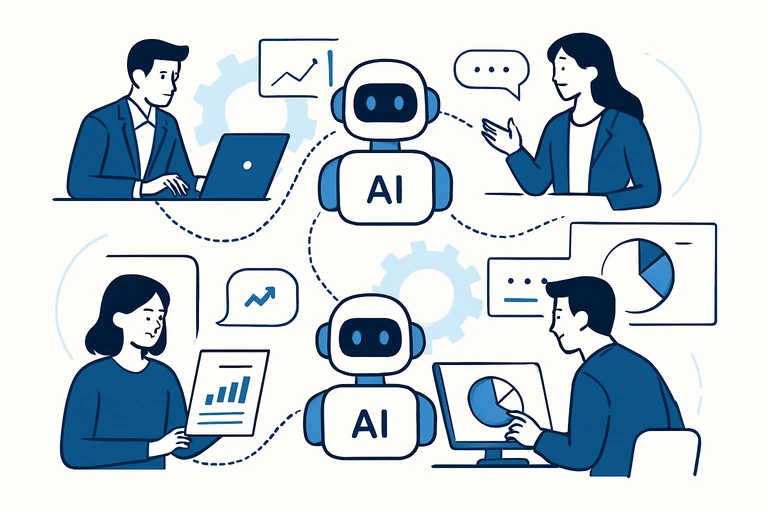
The Rise of Autonomous Agents in 2025 explores practical patterns, platforms, and governance conside...
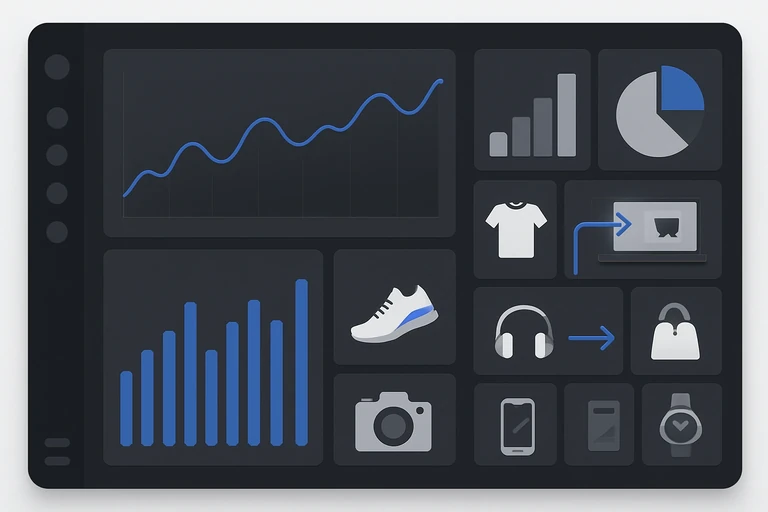
Real-Time AI Personalization in E-commerce: Turning Every Interaction into Relevance
Real-time AI-powered personalization is changing the way e-commerce engages customers. This guide explains why it matters, outlines a practical architecture, surveys essential technologies, and provides a step-by-step roadmap to implement real-time personalization that scales with your business while respecting user privacy.
Introduction
In the fast-paced world of online retail, real-time personalization is no longer a luxury — it’s a strategic necessity. Customers expect experiences that feel tailor-made: product recommendations that align with their current mood, search results that reflect their latest intent, and offers that respond to the moment. Artificial intelligence (AI) makes this possible at scale, turning streams of data into timely, relevant interactions. This post explains why real-time personalization matters, outlines a practical architecture, surveys the core technologies you can use today, and delivers a concrete, step-by-step roadmap to implement it in your e-commerce environment.
Why real-time personalization matters in e-commerce
Personalization has been shown to drive engagement, conversions, and lifetime value. When content, recommendations, and promotions align with a user’s current context and long-term preferences, you reduce friction and increase trust. Industry studies and practitioner reports consistently show that personalized experiences help brands lift engagement and revenue, with targeted recommendations and tailored messaging being notable drivers of improved outcomes. Formally, AI-powered personalization can boost relevance, reduce bounce rates, and increase average order value by surfacing the right items at the right moment.
For modern retailers, the challenge is not just to personalize, but to do so in real time—to adapt to a user’s behavior as it happens, while also accounting for broader catalog dynamics (inventory, promotions, seasonality). Real-time personalization enables:
- Dynamic product recommendations on product pages, homepages, and search results that reflect the user’s evolving interests.
- Context-aware content and merchandising (banners, banners, messages) that react to location, device, time, and recent actions.
- Adaptive search and ranking so the most relevant items surface first as a user browses.
- Real-time experimentation and rapid learning from fresh interactions, accelerating optimization cycles.
Real-time personalization is supported by purpose-built tools and a streaming data foundation. Modern approaches use a combination of event streaming, feature stores, and low-latency model inference to deliver instantaneous recommendations and experiences. See examples of real-time personalization architectures and services from industry leaders and open-source ecosystems.
A practical architecture for real-time AI personalization
At a high level, a real-time personalization stack ingests user interactions, computes features in near real time, accesses a live model or recommendation engine, and delivers personalized experiences through the website, app, or marketing channels. The key concept is the data-to-decision loop: data arrives, features are materialized, models infer, and the results influence the user experience within milliseconds to seconds. A typical stack includes the following layers:
- Data ingestion and event streams: capture user actions (views, clicks, purchases), catalog updates, and contextual signals (location, device) in real time. Event streaming platforms enable high-throughput, low-latency data flows.
- Feature store (online features): a centralized repository of features used for training and real-time inference, ensuring consistency between training and serving data.
- Model serving / inference: low-latency APIs that return personalized recommendations, reranked results, or dynamic content.
- Experience layer: the front-end or CMS that applies the personalized results to the shopping experience (site banners, product carousels, search rankings, emails, push notifications).
- Governance, privacy, and monitoring: data governance, consent management, and continuous monitoring of latency, quality, and business metrics.
Concrete implementations vary, but several approaches have proven effective in practice. For example, managed services and open-source tools are used to flow data, compute features, and serve real-time inferences. Feast, an open-source feature store, provides a structured way to manage features for training and serving, including an online (low-latency) store for real-time inference.
Feast is widely adopted in production ML pipelines and supports real-time recommendations, fraud detection, and segmentation use cases.
Core technologies that enable real-time personalization
Below are the core technology layers and representative patterns you can adopt today. Each entry includes a practical note on how it helps you achieve real-time personalization at scale.
Data streams and event-driven architectures
Real-time personalization starts with fast, reliable data movement. Event streams enable ingestion of user interactions, catalog changes, inventory events, and downstream signals in near real time. Architecture patterns include stream processing with tools such as Apache Kafka and Flink or Apache Spark Structured Streaming, enabling windowed analytics and feature computation on the fly. A practical reference is a session that describes building near real-time recommendations with stream data and a dedicated event-tracking pipeline.
Citations and examples: Kafka-based streaming and real-time personalization patterns have been demonstrated in industry sessions and architecture blogs.
Sources: Confluent’s real-time personalization use cases and demonstrations with Kafka and Flink illustrate how streaming can power real-time recommendations and revenue gains.
Feature stores for consistent, low-latency features
A feature store provides a single source of truth for features used during model training and serving. In real-time contexts, online feature stores are accessed with very low latency to support per-request inference. Feast is a prominent open-source option designed to manage features with consistency between batch and online modes, time-travel training, and a push-based online serving model.
Feast in practice supports real-time recommendations and other ML-ready features, aligning training/inference so models see a consistent view of data. For more on Feast architecture and usage, see the official docs.
Model serving and real-time inference
Once features are ready, models (or embedding-based recommenders) are hosted behind low-latency APIs. Serving can leverage specialized ML platforms (e.g., TensorFlow Serving, TorchServe, or custom microservices) and can be complemented by vector databases for similarity lookups or retrieval augmented generation (RAG) patterns when appropriate. Managed services such as Amazon Personalize illustrate how a purpose-built service can support near real-time recommendations with streaming event trackers.
Practical references: Amazon Personalize provides near real-time recommendation campaigns and event-tracking pipelines to ingest user interactions in real time, enabling rapid adaptation of recommendations.
Personalization strategies and algorithms
Real-time personalization relies on a mix of algorithms and data signals. Common strategies include:
- Real-time recommendations that adapt to recent actions and context (views, edits, carts, purchases).
- Re-ranking and search personalization to surface items most likely to convert within a given session.
- Contextual and location-aware offers that respond to time, device, and geography.
- Segment-based personalization when you want to balance scale and privacy by using first-party or zero-party data to create meaningful cohorts.
For a practical, architectural view of near real-time personalization, see AWS architecture guidance on near real-time personalization with Amazon Personalize.
Data privacy, governance, and ethics
Real-time personalization requires careful attention to privacy and consent. Liberal data collection for instant personalization can conflict with regulatory requirements and user expectations. A privacy-by-design approach—minimizing data collection, obtaining explicit consent, and offering clear controls—helps maintain trust while enabling effective personalization. Industry discussions emphasize transparency, consent management, data minimization, and the option to opt out.
Roadmap: how to implement real-time AI personalization in your e-commerce stack
Following a structured plan reduces risk and accelerates time-to-value. Here is a pragmatic, step-by-step roadmap you can adapt to small teams or enterprise environments.
- Define objectives and success metrics. Clarify the business goals (e.g., higher CVR, increased AOV, improved cart completion) and align with customer experience principles. Establish primary metrics (conversion rate, click-through rate, revenue per user, time-to-purchase) and model-level metrics (NDCG, recall@k, precision@k) to monitor performance.
- Audit data sources and privacy requirements. Inventory the data you collect (clicks, views, purchases, search queries, location, device). Map data flows, storage locations, and consent constraints. Decide on data minimization and consent strategies before capturing new data streams.
- Choose your architecture pattern. Decide whether to build in-house (Kafka + Flink + Feast + custom services) or to adopt managed services (e.g., Amazon Personalize, cloud-based streaming and feature stores). Real-world guides show how to connect streaming data to real-time recommendations using these components.
- Set up data ingestion and streaming. Implement event pipelines to capture user actions (page views, carts, purchases) and product signals (prices, inventory). Use an event bus or streaming platform with low tail latency and reliability guarantees.
- Build or configure a feature store. Define features that are stable across training and serving, with a clear time windowing strategy to avoid data leakage. Feast exemplifies the separation of offline training data and online serving features.
- Develop the inference layer. Deploy models or recommendation engines with low-latency runtimes. If you’re building in-house, consider embedding vectors, nearest-neighbor search, or re-ranking pipelines. If using a managed service, integrate via APIs to retrieve near real-time recommendations.
- Integrate with the experience layer. Apply personalized results to product pages, search results, banners, and emails. Ensure the frontend can render in real time without compromising page load times.
- Test, measure, and iterate. Run rapid A/B tests, track business and model metrics, and implement CI/CD for ML components to reduce drift and maintain performance.
- Governance and privacy controls. Implement consent management, data usage transparency, and user controls to comply with regulations and maintain trust.
- Observability and guardrails. Monitor latency, data quality, model drift, and bias. Set up alerting for latency spikes and inaccurate recommendations, and establish rollback procedures.
Tip: Start with a scoped pilot (e.g., a single high-traffic category or a specific marketing channel) before expanding to the entire catalog and all channels. This helps you calibrate latency budgets, feature design, and consent workflows.
Metrics that matter: measuring real-time personalization success
To prove value and guide iteration, track both business outcomes and model performance. Key metrics include:
- Business metrics: conversion rate (CVR), click-through rate (CTR), average order value (AOV), revenue per user, and lift from personalized experiences.
- User experience metrics: page load time, time to first meaningful interaction, and engagement with personalized sections (e.g., “Recommended for you”).
- Model and system metrics: precision@k, recall@k, NDCG, latency (end-to-end latency from event to rendered result), and feature freshness (how current the features are).
- Privacy and trust metrics: consent opt-in rates, opt-out rates, data-access requests, and customer satisfaction with transparency and controls.
Balancing performance with privacy is essential. Real-time personalization should be designed with data minimization and explicit user consent in mind, so you can deliver relevant experiences while respecting user rights.
Practical example: a hypothetical e-commerce use case
Imagine an online apparel retailer with a catalog of 100k items and millions of monthly visitors. The goal is to increase conversion while maintaining a positive user experience. Here’s a concrete blueprint you could adapt:
- Capture signals in real time. Track product views, add-to-cart events, purchases, search queries, and user context (location, device, time).
- Compute real-time features. Maintain features such as recent view counts, short-term popularity, user affinity with product categories, and price sensitivity signals in an online feature store.
- Serve real-time recommendations. Use a near real-time ranking model to re-rank search results and homepage recommendations based on the latest signals. If using a managed service, call the recommendation API as part of the page render flow.
- Personalize the experience across channels. Tailor on-site content, push notifications, and email recommendations using consistent features and events.
- Evaluate and iterate. Run controlled experiments (A/B/n tests) to measure lift in CVR and AOV, and refine features and models based on results.
This kind of setup is drawing from best practices in both open-source and managed service ecosystems. Feast enables stable feature management for training and serving, while Amazon Personalize demonstrates a practical route to near real-time recommendations with event streaming.
Common pitfalls and how to avoid them
Real-time personalization can backfire if not designed carefully. Here are frequent missteps and how to prevent them:
- Over-collection of data. Collect only what you truly need and implement robust consent workflows to avoid privacy issues.
- Latency creep. If latency grows beyond user tolerances, it degrades experience more than it improves relevance. Start from a tight latency budget and measure end-to-end time.
- Model drift and data leakage. Implement time-aware training data, cross-check for leakage between training and serving, and monitor drift regularly. Feast’s time-travel features help reduce leakage during training.
- Unclear governance. Establish data-use policies, consent preferences, and audit trails so personalization remains compliant and transparent.
- Poor integration with the front-end. Ensure the front-end can render personalized content quickly, and consider progressive loading or fallback experiences if personalized data is not yet available.
Case for a partner: why working with a capable software partner matters
Implementing real-time AI personalization is a cross-cutting initiative requiring data engineering, ML, DevOps, and product design. A capable partner can help you align technology choices with business goals, ensure privacy compliance, and design an architecture that scales with demand. Practical, field-tested guidance from leading vendors and practitioner communities demonstrates the viability and value of these approaches when implemented thoughtfully.
Conclusion
Real-time AI personalization holds the potential to transform e-commerce experiences from generic to genuinely relevant, boosting engagement, conversion, and loyalty. By building a robust data-to-decision loop—harnessing real-time streams, a centralized feature store, low-latency inference, and privacy-conscious governance—you can deliver highly contextual experiences that scale with your business. The landscape is broad: you can start with a turnkey service like Amazon Personalize for near real-time capabilities, or you can architect a custom stack using open-source tools like Kafka, Flink, and Feast for maximum control and flexibility. The right choice depends on your goals, team, and risk tolerance.
Multek helps organizations design and implement AI-powered personalization that respects user privacy, scales with demand, and delivers measurable business impact. If you’re exploring a real-time personalization program, we can help you assess readiness, choose the right architecture, and execute with speed and rigor.
You may also like

DevOps is within reach for SMEs. This practical guide outlines a lean, value-driven approach to auto...

Protecting APIs from leaks requires a defense-in-depth approach: strong authentication, fine-grained...